


You clock out.
The weight you carry stays.
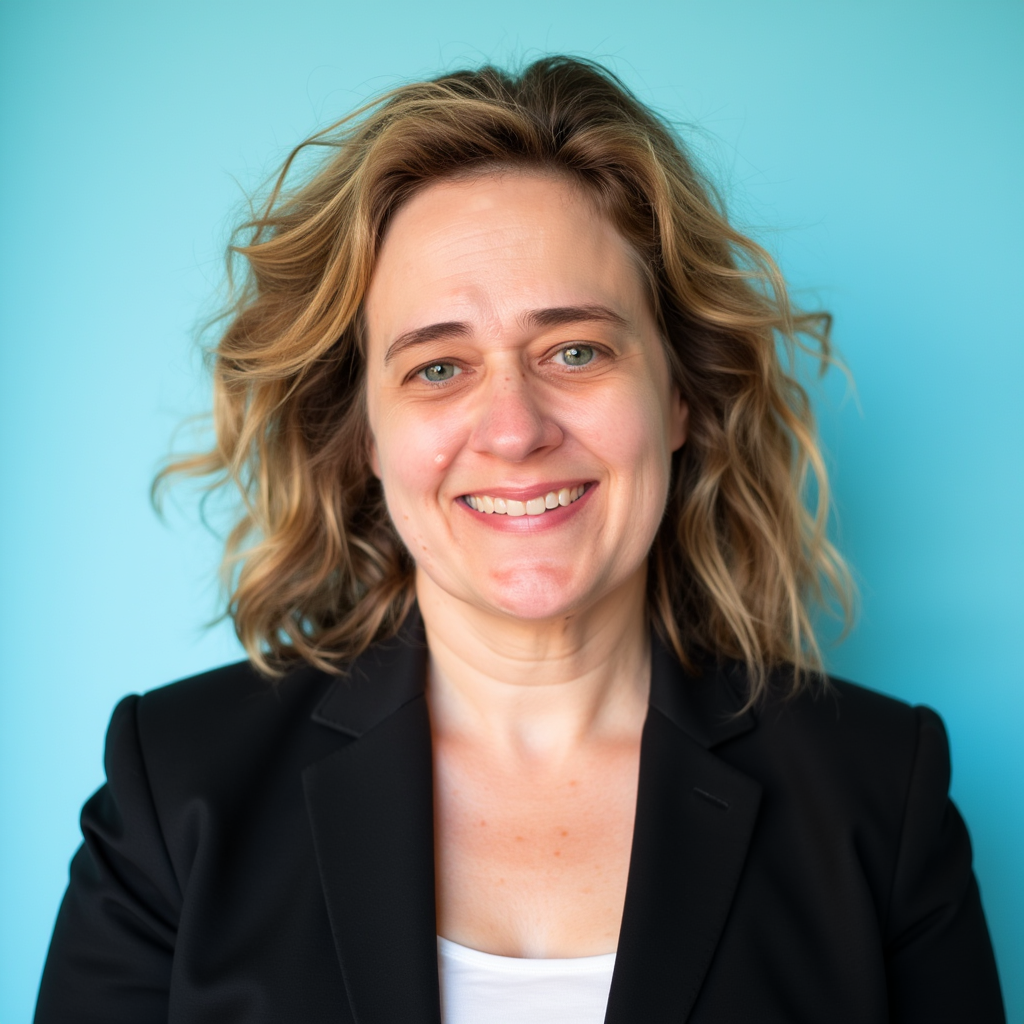
I’m Kelly (she/her). I’m a psychologist in Seattle-Tacoma, WA, and I work with people who are very good at keeping it all together — and are quietly exhausted by it.
Most of my clients are healthcare professionals, first responders, and other thoughtful adults carrying enormous responsibility. They are skilled, capable, caring — and they’ve often spent years putting their own needs somewhere near the bottom of the list.
I practice relational therapy. I don't work from a checklist. I'm less interested in managing your symptoms than in understanding what they're trying to tell you. I work from curiosity — about you, about your patterns, about the deeper current that formed long before you walked into my office and quietly shapes everything.
We work toward a deeper sense of ease — and something more lasting: loosening the grip of old patterns so you can move through your life with more freedom and more choice.
This is a place where you don’t have to perform. You just have to be open — and willing to listen to your own heart.
DR. KELLY DICKINSON
WA, OR, IL, NM, FL, AND PSYPACT STATES

What I Believe | The Values Behind This Work
Dr. Kelly Dickinson • Pathwise Psychology
Therapy is built on more than technique. It’s built on a set of beliefs about people — what they need, what they’re capable of, and what it means to truly help. These are mine.

Depth over quick fixes.
Real change doesn’t happen at the surface. The patterns that keep people stuck — the exhaustion, the disconnection, the sense that something is off but you can’t quite name it — those didn’t develop overnight, and they don’t resolve with a checklist or a coping strategy alone.
I believe in taking the time to understand what’s underneath. That’s where lasting change lives.
Sustainability over endurance.
Pushing through is a skill. But it is not a life. The goal of this work is not to help you endure more — it’s to help you build something more sustainable. A way of living and working that doesn’t require you to continuously deplete yourself to keep going.
Wellbeing is not a reward for productivity.
Many of the people I work with have spent years treating their own needs as secondary — something to get to after the work is done, after everyone else is taken care of, after things settle down.
Things rarely settle down.
I believe your wellbeing matters — not because it makes you more effective, but because you are a person, and that is enough.
The relationship is a part of the work.
Therapy isn’t something I do to you — it’s something we do together. The quality of that relationship, the safety and honesty within it, is not incidental to the work. It is the work.
I take that seriously. I show up fully, I stay present, and I don’t rush.
Your whole self belongs here.
You don’t arrive in my office as a diagnosis or a set of symptoms. You arrive as a person — with a history, a culture, a set of values, and a life that has shaped you in ways that matter.
I am committed to understanding the full context of who you are. That includes your identity, your background, and the systems you’ve moved through — some of which may have asked more of you than they gave back.
Culturally responsive, identity-aware care isn’t an add-on. It’s foundational.
Slow is not the same as stuck.
This work unfolds over time. That’s not a limitation — it’s the point. Depth requires patience. Insight requires room to breathe. The most meaningful shifts often happen quietly, beneath the surface, before they’re visible anywhere else.
I don’t rush the work. I trust the process.
Why people trust this work — And keep coming back
20+
YEARS OF CLINICAL PRACTICE ACROSS HEALTHCARE, COMMUNITY MENTAL HEALTH, AND PRIVATE PRACTICE
DEEP
ADVANCED TRAINING AND PRACTICE IN RELATIONAL, TRAUMA-INFORMED, MINDFULNESS-BASED, AND EVIDENCE-INFORMED THERAPIES
I've spent more than two decades working with people in hospitals, outpatient clinics, military healthcare settings, and private practice. Much of that work has been with individuals carrying significant responsibility—people whose decisions affect others and who are accustomed to being the ones others depend on.
Over the years, I've learned that meaningful therapy isn't about quick answers or performing expertise. It's about creating a space where you can slow down enough to understand what has been driving your experience and begin relating to yourself differently.
Clients often tell me they experience me as calm, steady, and engaged. I don't rush the work, and I'm not easily unsettled by complexity, uncertainty, or strong emotions. Together, we make room for the conversations that are often difficult to have elsewhere.
I also understand personally what it can be like to carry substantial responsibility while trying to maintain your own wellbeing. The tension between caring for others and caring for yourself is something I've encountered both professionally and personally.
The people I work with are rarely looking for someone to impress them. They're looking for a thoughtful, collaborative relationship where they can step out of constant performance, reflect more deeply, and reconnect with what matters most.
My Background
The Details
-
Degrees
Ph.D., Clinical Psychology — Pennsylvania State University, 2001
M.S., Clinical Psychology — Pennsylvania State University, 1997
B.A., Psychology — University of Saint Thomas, St. Paul, MN, 1994
Clinical Training
Postdoctoral Fellowship — VA Medical Center, Minneapolis, MN
Predoctoral Internship — Northwestern Memorial Hospital / Northwestern Medical School, Chicago, IL
Practicum — Penn State Counseling Center
Licensure
Washington Licensed Psychologist, License #PY3728 — May 2007–Present
-
Psychologist & Founder, Pathwise Psychology PLLC — Federal Way, WA (April 2025–Present)
Psychologist, Federal Way Vet Center, Readjustment Counseling Services, VHA — Federal Way, WA (2013–2025)
Staff Psychologist, Puget Sound VA Healthcare System, American Lake Division — Tacoma, WA (2009–2013)
Staff Psychologist, Department of Defense, Madigan Army Medical Center — Fort Lewis, WA (2006–2009)
Staff Psychologist, VA Medical Center — Minneapolis, MN (2003–2006)
Staff Psychologist, Gary L. Fischler & Associates — Minneapolis, MN (2002–2003)
-
Evidence-Based Psychotherapies
Prolonged Exposure (PE)
Cognitive Processing Therapy (CPT)
Cognitive Behavioral Therapy for Insomnia (CBT-I)
Dialectical Behavior Therapy (DBT)
Acceptance and Commitment Therapy (ACT)
Integrative Behavioral Couple Therapy (IBCT)
Time-Limited Dynamic Therapy
Exposure, Relaxation, and Rescription Therapy for Military (ERRT-M)
Gottman Level 1 and 2 Couples Therapy
Additional Certifications & Skills
Mindfulness-Based Interventions
Clinical Hypnosis Level 1 ASCH
Collaborative Assessment and Management of Suicidality (CAMS)
Primary Care Behavioral Health Consultation
Therapeutic Writing Groups
iRest (C) meditation Level 2 Practitioner, a yoga nidra-based mindfulness practice for trauma and sleep.
Registered Yoga Teacher (200-Hour RYT)
-
Publications
Polusny, M. A., Dickinson, K. A., Murdoch, M., & Thuras, P. (2006). The role of cumulative sexual trauma and difficulties identifying feelings in understanding female veterans' physical health outcomes. General Hospital Psychiatry, 30(2), 162–170.
Ruiz, M. A., Pincus, A. L., Dickinson, K. A. (2003). NEO PI-R predictors of alcohol use and alcohol-related problems. Journal of Personality Assessment, 81(3), 226–236.
Dickinson, K. A., & Pincus, A. L. (2003). Interpersonal analysis of grandiose and vulnerable narcissism. Journal of Personality Disorders, 17, 188–207.
Ruiz, M. A., Dickinson, K. A., Pincus, A. L. (2002). Concurrent validity of the Personality Assessment Inventory (PAI) Alcohol Problems scale in a college student sample. Assessment, 9(3), 261–270.
Pincus, A. L., Dickinson, K. A., Schut, A., Castonguay, L., & Bedics, J. (1999). Integrating interpersonal assessment and adult attachment using SASB. European Journal of Personality Assessment, 15(3), 435–449.
Pincus, A. L., Newes, S. L., Dickinson, K. A., & Ruiz, M. A. (1998). A comparison of three indices to assess the dimensions of SASB. Journal of Personality Assessment, 70(1), 145–170.
-
I'm originally from Minnesota — the accent gives it away every time — and I've made the Pacific Northwest my home and my heart. I'm a reader, a traveler, and a devoted servant to three very spoiled pugs. My camper van has taken me to some of the most grounding places I know, and I believe there's something quietly therapeutic about being in motion, in nature, with the people you love. Music is a big part of my life — there's nothing quite like catching live music at an outdoor venue with good company. I also believe in the power of a good laugh — comedy is a serious hobby, and my sense of humor runs toward the irreverent. Those experiences — of slowing down, paying attention, finding your footing in new places, and not taking yourself too seriously — aren't separate from my clinical work. They're part of it.
Who finds their way here?
People come to me when something has quietly shifted — when the strategies that once worked are no longer working, or when the weight of responsibility has finally become too much to carry alone.
They are often the last person anyone would expect to need support. They show up for everyone else. They make good decisions under pressure. They’ve built lives that look, from the outside, just fine.

But inside, something has been building — stress that won’t release, a numbness they can’t name, or a creeping sense that they’ve lost touch with who they are beneath the roles they carry.
In therapy, we take time to understand how these patterns developed and how they continue to shape your experiences today. Through a collaborative and reflective process, we work toward greater clarity, steadiness, and the freedom to move forward in ways that feel more aligned with your values.
Therapy here isn’t about crisis management. It’s about reclaiming the parts of yourself that you’ve had to set aside — and building a life that can hold both your responsibilities and your own well-being.
That something that brought you here.
I'm glad it did.
When the weight won’t lift, something deeper has to shift.
You've been the one holding it together for a long time. This is a place to set some of the weight down — to be understood, to slow down, and to start finding your way back to yourself.
If something here feels familiar, I'd love to hear from you.
PATHWISE PSYCHOLOGY PLLC
Relational, mindfulness-based therapy for healthcare professionals and other high-responsibility adults seeking clarity, balance, and a more sustainable way forward.
Telehealth services in WA, OR, IL, NM, FL, and PSYPACT States.